The early years
His real name, Kim Bendix Petersen, was born on June 14, 1956 in Hvidovre, a suburb of Copenhagen. His childhood was, as he has described it, completely normal, though with strict family discipline: his father was a warehouse foreman and his mother was the mayor’s secretary. Even though he later built his whole image around the occult, he has made clear that he did not grow up in a religious environment.
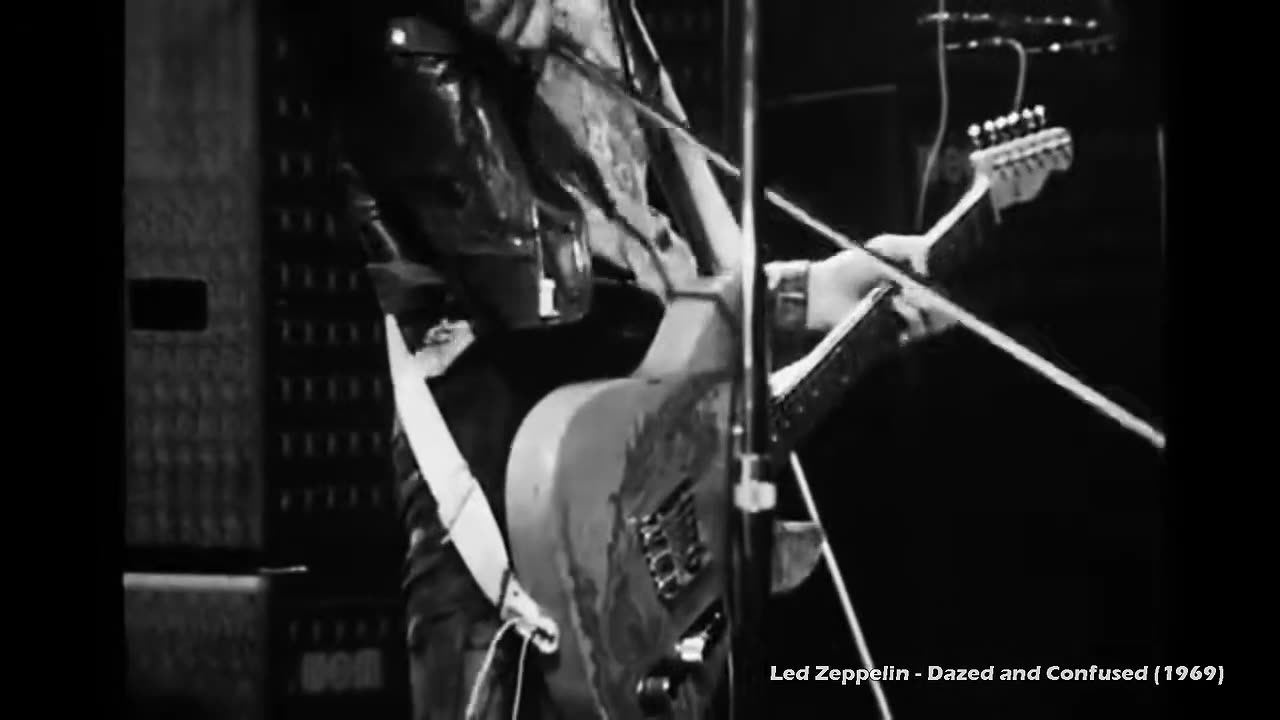
The big change came in his teenage years, when he discovered the heavy rock of the early ’70s. Around 1970 he heard Led Zeppelin‘s “Dazed and Confused” and the way Jimmy Page handled the guitar — he has described it as something that “hypnotized” him. This detail matters: King Diamond didn’t start as a singer, but as a guitarist. At the same time he began to be drawn to the dark side of rock: Black Sabbath were a big influence, but what drew him was his hero’s relationship with the occult and with Aleister Crowley. From there he read more and ended up with the writings of Anton LaVey and the Satanic Bible. Important: for him satanism was never a trick to shock. He always treated it as a philosophy of individuality and personal freedom, not as worship of a supernatural Satan. This distinction would become the foundation of his lyrics.

In 1975 he went to two concerts in Copenhagen that showed him what he wanted to do. The first was Peter Gabriel’s Genesis, in their last period together: he was impressed by the costumes, the makeup and the fact that the concert felt like a theatrical performance. The second was even more decisive: Alice Cooper on the “Welcome to My Nightmare” tour. He stood very close to the stage and remembers Cooper as something unreal. There his basic idea was formed: a singer doesn’t just need to sing — he can play a character.
From guitarist to singer
His first serious band was Brainstorm, a local hard rock outfit in the mid-70s, with him on guitar. Around that time the name King Diamond first appeared: there is no deep occult story hidden behind it, as he has explained with humor, only that the members of Brainstorm believed they would become big stars and decided to take stage names. When he later went to Black Rose and then Mercyful Fate, everyone already knew him that way and he kept it.
The real artistic turning point was Black Rose, in the late 70s. They were looking for a singer and he went to the audition hoping to join as a guitarist too. The band’s guitarist shut it down immediately: he didn’t want a second guitar. So King put down the Gibson and the Marshall and tried to sing. They gave him Deep Purple‘s “Space Truckin'” and he tried to reach Ian Gillan‘s high notes. At first what came out was a howl and he went home voiceless after rehearsals. Slowly he discovered that he could use the very high ranges of his voice — without lessons and, as he says, without even knowing what falsetto is. Thus one of the most recognizable voices in metal history was born.
After Black Rose he went to Bratz, a strange hybrid of punk, hard rock and heavy metal, who had already put out a record on CBS Denmark and whose lineup included guitarist Hank Shermann. King remembers that before he joined the band was half heavy and half punk, while with his arrival it turned toward heavy. The label didn’t like this at all: they wanted something more commercial and more “Danish”, with pressure even for lyrics in Danish. Neither King nor Shermann wanted to even discuss it. The heavy part of Bratz essentially split off from the old band and became something new.
Mercyful Fate
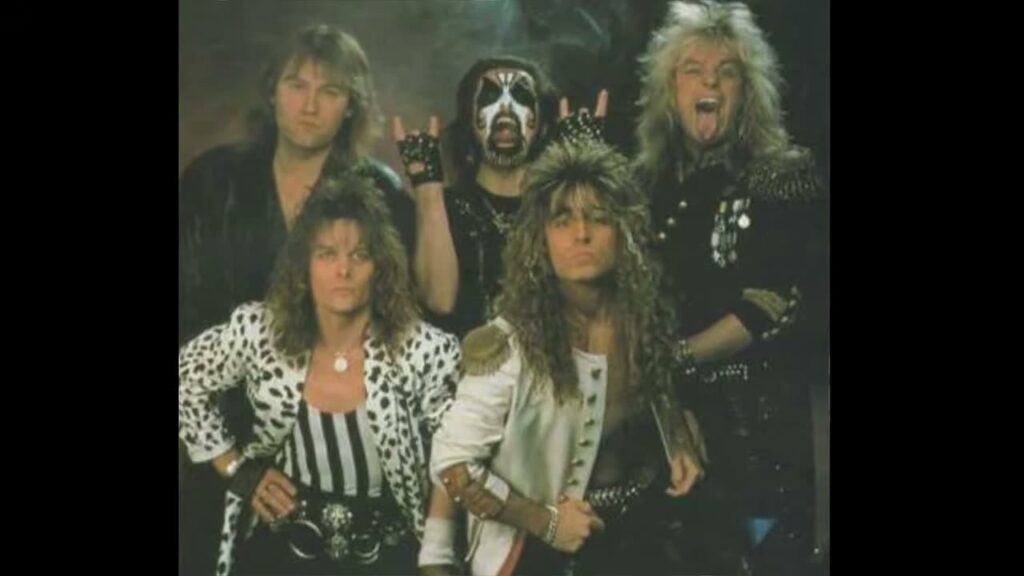
One more link was missing though: guitarist Michael Denner and his Danger Zone. Denner had also passed through Bratz and in his new outfit he was working with bassist Timi Hansen. King and Hank helped him with the material and so in early 1981 the four of them formed Mercyful Fate. The name comes from a mutual friend of theirs, while the change from “Mercyful” to “Mercyful Fate” was made by the musicians themselves. Musically they moved between Black Sabbath, Judas Priest, Deep Purple, Uriah Heep and the progressive/hard rock of the 70s, with King’s voice going from deep theatrical vocals to extreme falsetto. And then there was the image: deathly makeup, inverted crosses and later the famous microphone made of human bones.
Within 1981 the band, with Kim Ruzz on drums, put out two demos containing early versions of tracks that later became classics — “Curse of the Pharaohs”, “Return of the Vampire”, “Burning the Cross”. The demos began circulating through the tape-trading network of the time. We’re talking about an era before the internet: tapes were copied from fan to fan and traveled from Denmark to Germany, Britain and the US. The first real opportunity came from the small Dutch label Raveon Records: in September 1982 Mercyful Fate entered Stone Sound Studio in the Netherlands and recorded their first official EP, which was released on November 8, 1982 simply as “Mercyful Fate” — it later became known to collectors as “Nuns Have No Fun”. The conditions were whatever they were, but the music was impressive: “A Corpse Without Soul” had the complex riffs that would characterize the band and King’s voice sounded like nothing else in metal in 1982.

The EP’s success drew the attention of the bigger Dutch Roadrunner Records. The band signed and in July 1983 entered Copenhagen’s Easy Sound Recording Studios with producer Henrik Lund. The budget remained small — they had eight days — and the result was “Melissa“, released on October 30, 1983. Listening to it now you forget how strange it must have sounded then: it wasn’t thrash, it didn’t belong to the New Wave of British Heavy Metal, it wasn’t doom, and of course there was no black metal yet in today’s sense. It was simply something unique. “Satan’s Fall” is an almost ten-minute mini-epic with 16 different riffs — Shermann thought of each track as a chain of riffs that make up a musical narrative. And the title track showed something that would become fundamental to King’s work: the creation of characters and stories. Melissa is a witch who was burned at the stake — she didn’t remain a song title, she became a recurring character in the band’s mythology.
The record’s success allowed them to play outside Denmark. The European tour began on January 19, 1984 at the Dynamo in Eindhoven. On January 21 they played at the Paradiso in Amsterdam, where a fan managed to steal Melissa’s skull from the stage due to inadequate security. In February a tour of Italy followed with six concerts and on March 3 the British tour began, as support for Manowar. Much has been said about it: 11 concerts were scheduled and Mercyful Fate eventually played one, at St. Albans City Hall in Hertfordshire. The way Manowar’s people treated them created such an issue that they preferred to walk away, losing significant money and disappointing the British audience.
At the concerts that did happen, the biggest impression was of course made by King’s presence. One of the most notorious stage props was the microphone made of human bones — and they really were bones. The singer has explained that it was a femur and a shinbone, from a doctor who taught biology.
Within 1984 Mercyful Fate now had real momentum. In May they returned to the studio, this time with about 12 days — a luxury compared to the 8 of “Melissa” — and again with producer Henrik Lund. The result was “Don’t Break the Oath“, released on September 7, 1984. The record took all the elements of “Melissa” and made them more extreme: more complex guitars and structures, a more dramatic King, a more theatrical atmosphere, a more complete occult aesthetic. The title track looks more like an occult theatrical performance than conventional heavy metal. Compared to the immediate darkness of “Melissa”, though, it takes more time to digest.
The end and the beginning of King Diamond
In late 1984 everything seemed to be going well: two excellent records, international distribution, a European audience, an American tour and a strong underground following. The third album seemed ready to take them even higher. Then the problem arose: Hank Shermann no longer wanted to play this music. He was the band’s main composer — he had written all the music of “Melissa” and much of “Don’t Break the Oath” — but within 1985 his tastes had changed: he was listening to funk and more commercial American hard rock. King has characteristically mentioned Mother’s Finest as an example of the funk direction that interested him. Shermann wanted to put these into Mercyful Fate and King didn’t want to even discuss it.
King has described the scene: the band members were at his house listening to Hank’s new demos. They were so different, so toward commercial American rock, that the others started laughing — they thought he was joking and told him something like “nice one Hank, now put on the real one”. Only it wasn’t a joke. Sherman meant it. King concluded that there couldn’t be a Mercyful Fate record with one side dark heavy metal and the other commercial hard rock. The end came in Copenhagen: on April 11, 1985 they played at the Saga, in the last concert of that period, and the next day, April 12, King called the other members and announced he was leaving.
Why didn’t they just fire Sherman? Fair question. King has given a second explanation too: they also wanted a better contract. Instead of continuing as Mercyful Fate, King, Michael Denner and Timi Hansen formed a new band — with a new name they could negotiate with Roadrunner from a different position. Sherman formed Fate, with a more melodic and commercial sound. Denner remembers that after the divorce both of them called him asking him to join their new band — and he chose King, because he wanted to continue the heavy metal.
And then something ironic happened: shortly after the split, the big fuss over the PMRC, the organization against the lyrics and image of hard rock bands, broke out in the US. “Into the Coven” from “Melissa” made the notorious “Filthy 15” list, with songs that supposedly corrupted American youth. The band gained free national publicity in the US, exactly at the moment it had disbanded.
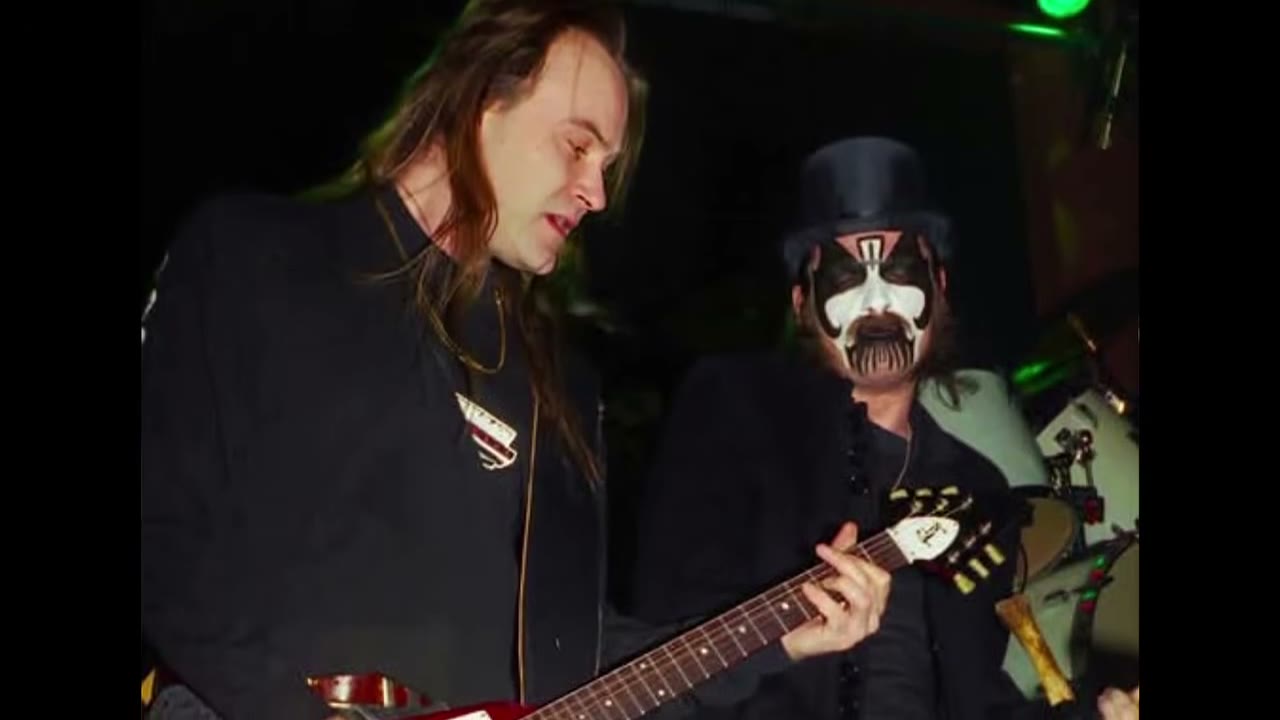
King didn’t take long to decide what to do. He took with him the two key collaborators from Mercyful Fate, Michael Denner on guitar and Timi Hansen on bass, and built a band around his name: simply King Diamond. There was a practical reason too — the name was already known from Mercyful Fate and the new band allowed a better contract with Roadrunner. The lineup was completed by two very important musicians from Sweden: Andy LaRocque on guitar and Mikkey Dee on drums. LaRocque developed into King’s most important musical collaborator, while Dee — long before Motörhead — gave the band an impressively dynamic and technical rhythm section.
Before any record came out, on December 25, 1985 the very distinctive single “No Presents for Christmas” was released. The recordings had begun in July at Copenhagen’s Soundtrack Studios. There is an important detail: Andy LaRocque joined almost at the last moment. The band had another guitarist in mind, something that didn’t work in the studio, and LaRocque was called in to record the solo of “Dressed in White” — the process worked like an audition. He got the spot, but didn’t manage to contribute anything to the songwriting.
The album was released on March 14, 1986 under the title “Fatal Portrait“. It isn’t entirely a concept album, but five of its tracks (“The Candle”, “The Jonah”, “The Portrait”, “Dressed in White”, “Haunted”) are linked into one story: a little girl, Molly, has been locked in an attic by her mother and dies. Already here the elements that would become King’s trademark are visible: characters, haunted houses, family secrets, the supernatural and revenge. Musically it hasn’t fully weaned itself from Mercyful Fate, but commercially it did extremely well: estimates speak of more than 100,000 copies in North America, a huge number for a European heavy metal band without radio support. The tour began in May 1986 in Europe and continued with 28 appearances in North America, a large part of which were with Megadeth — back when they were promoting “Peace Sells… but Who’s Buying?”. The important conclusion was one: the band could stand as a headliner in America.
The second record was recorded from December 1986 to February 1987, at the same studio, with King producing and Roberto Falcao handling the sound. It was released on May 29, 1987 under the title “Abigail” — and there the band found exactly the form it was looking for. It is a full concept album: summer of 1845, a young couple, Miriam and Jonathan, move into an old mansion he inherited. On the first night Jonathan meets the ghost of a dead relative, the Count, who shows him a coffin with the body of a dead child, Abigail, and informs him that Miriam carries her spirit and the child will soon be reborn. He doesn’t believe him — until Miriam becomes pregnant and the fetus develops at a crazy rate. The record works like an audio horror film, with small musical passages, narration and sound effects.
Andy LaRocque transforms here from an excellent guitarist into King’s key creative collaborator. Commercially the band makes the big leap: “Abigail” became the first King Diamond record to enter the Billboard 200, at number 123, and reached 175,000 copies in the US. For a Roadrunner artist in 1987, that was a great deal. The band also shot its first video, for “The Family Ghost“, and the tour was bigger: 27 European and 46 American appearances, with far more theatrical staging — mansions, candles, coffins. King essentially began building the metal equivalent of the theatrical logic of Alice Cooper that had bewitched him 12 years earlier.
The “Them” years
However the band’s new position had consequences for its balances. Michael Denner could no longer stand the grueling touring pace and left shortly after they began, replaced by Mike Moon. After the return from the road Timi Hansen also left. Their spots were taken by Swedish guitarist Pete Blakk and American bassist Hal Patino, and this lineup recorded the third record at Copenhagen’s MMC Studios, with production by King Diamond and Roberto Falcao. It was released in Europe on July 18, 1988 and a little later in the US, under the title “Them“. It is one of his darkest concept records: a boy — King himself as a character —, his sister Missy and their grandmother, who returns from a psychiatric clinic and communicates with some mysterious presences in the house, the “Them”. She uses a tea ritual, into which she puts blood — from the children’s mother, whose condition worsens. Missy discovers the truth and the story ends badly.
The record is even more complex, more gothic and more theatrical than the previous one. “Welcome Home” became one of the most recognizable tracks of his career, with a video, and the theatrical presentation of the grandmother on stage became a key part of the show. Commercially it reached number 89 on the Billboard 200 — the Dane’s biggest success in the US and the only record of the classic period that entered the American Top 100. The tour lasted from August to November 1988, with more than 50 appearances and support from Flotsam and Jetsam and later Armored Saint. It was perhaps the moment King Diamond came closer than ever to truly big commercial success: bigger venues, more expensive staging, videos playing often.
After the tour came the second big crisis: Mikkey Dee left. His relationship with King had become difficult and there were disagreements about the drummer’s role in the band. When the time came for the next record no replacement had been found, so King called him back as a session musician: he played on the entire album, but never returned as a permanent member. The fourth record was also the first time a King Diamond record was recorded in the US, at Rumbo Recorders in Los Angeles, with production by King Diamond, Andy LaRocque and Roberto Falcao and with Chris Tsangarides on the guitar solos and the mix. It was released on August 21, 1989 as “Conspiracy” and continues the story of “Them”: the now adult King returns home wanting to communicate again with the dead Missy, Dr. Landau, the mother, the “Them” and the priest Samuel appear, and the story ends with King locked in a coffin and burned alive. The excellent instrumental “Cremation” is essentially his curse on those who killed him.
“Sleepless Nights” was the promotional track, with a video, and perhaps the most immediately melodic thing they had written until then. The record moves in the same waters as “Them”, with fewer theatrical passages and more direct songs, without reaching the height of the previous one: number 41 in Sweden, 64 in the Netherlands, 111 in the US. The drop from 89 to 111 wasn’t dramatic yet and King Diamond remained an important name in international metal.
Mikkey Dee’s permanent replacement was the also Swedish Snowy Shaw, a highly theatrical drummer who fit the stage aesthetics perfectly. With him they entered the studio for the fifth record, in the summer of 1990, again in Denmark, at the famous Sweet Silence Studios. The moment you hear it, you immediately notice a different drum sound: Snowy Shaw played with pads and electronic triggering, which gave a more controlled but also colder result compared to Dee’s organic, aggressive playing. King has also revealed that Hal Patino was very late arriving for the bass recordings and the band spent expensive studio nights waiting. The atmosphere within the band wasn’t the best.
The record was released on October 30, 1990 as “The Eye” and has an important difference from the previous ones: the stories aren’t fictional. King based it on real historical events of the French Inquisition and the persecutions related to magic and religious arbitrariness, with the record itself noting that much of the stories are based on events that happened roughly between 1450 and 1670. The narrator sees these events through a mysterious object, the “eye”, and follows the fates of people who found themselves against religious authority, torture and the Inquisition. The tracks are simpler, with a dark theatricality that recalls Mercyful Fate, and far more keyboards within the songs, raising the gothic atmosphere.
The audience, however, didn’t embrace the record: “The Eye” reached only number 179 on the Billboard 200, a commercial failure. The disappointment was such that a proper tour wasn’t even held — the main cause being the lack of financial support from Roadrunner and King’s disagreements with the label, which he believed didn’t promote the album properly. A vicious circle was created: it didn’t sell, so there was no tour, so there was no promotion on the road. In our view, the record paid more for the changes in audience tastes and saturation: the band had put out five albums in five years, playing essentially similar things — a lot even for that era.
“The Eye” was essentially the end of King Diamond’s first era. The relationship with Roadrunner had seriously deteriorated and although the band didn’t officially break up, its activity practically stopped. Hal Patino and Pete Blakk left and were replaced by the Swedes Charlie D’Angelo on bass and Mike Wead on guitar, but this lineup didn’t record a studio album. The band fulfilled its contractual obligations with the live “In Concert 1987: Abigail”.
The return of Mercyful Fate
In 1992 Mercyful Fate reunited. Hank Shermann and Michael Denner made a demo with new material and gave it to King to listen to. The first thing he thought was that it sounded like Mercyful Fate — and he couldn’t deny that the material was very good. Soon Timi Hansen and drummer Snowy Shaw also returned, so for a while the lineup was almost the classic one. The band signed with Metal Blade Records and Brian Slagel convinced them that “In the Shadows” could do very well. The record was recorded at Dallas Sound Lab in Texas, with the same production team that worked with King (King Diamond, Hank Shermann, Andy LaRocque, Tim Kimsey and Roberto Falcao), and was released on June 22, 1993. It also had a special guest appearance, as Metallica’s Lars Ulrich played drums on the title track.
Four more records followed: “Time” in 1994, “Into the Unknown” in 1996, “Dead Again” in 1998, recorded at Nomad Recording Studios in Dallas, with a more open and more heavily-produced sound and some thrash moments, and “9” in 1999. Along the way members and directions changed and the band closed the decade with an album that didn’t convince everyone, but also with a high-profile appearance: in 1999 Mercyful Fate opened a large part of Metallica’s European tour from the billing positions of Megadeth, Slayer and Danzig — that is, they played as support, but at concerts with Megadeth and Slayer on the bill, proving their place in the metal of that era.
Two bands, two lives
Alongside the return of Mercyful Fate, King also revived his solo outfit. The band started again in the ’90s with only Andy LaRocque as a permanent face beside him and new members, and in 1995 released “The Spider’s Lullaby” — the only King Diamond record that isn’t a concept album, with the exception of one track. It was followed by “The Graveyard” in 1996, “Voodoo” in 1998, “House of God” in 2000 — which also completes an informal trilogy with the two previous ones —, “Abigail II: The Revenge” in 2002 and “The Puppet Master” in 2003, one of his darkest and rawest records, with a story about a puppet theater that puts on shows with real corpses. In “Puppet Master” his wife, Livia Zeta, also appeared for the first time on vocals, and she also took part in the next one, “Give Me Your Soul… Please” from 2007 — which has the particularity of not being a King story, but a narration about a murder, with the spirits of the murdered children appearing before him.
In 2010 came the most serious blow: King underwent a triple bypass and the band’s concerts stopped for quite a while. He has spoken openly about it, with characteristic honesty and humor: he said his heart was like a bomb. He returned to the stage when he felt ready, with concerts that continued all over the world, always keeping the theater in the set. In 2015 something happened that hadn’t happened before: he appeared on stage in Milwaukee without the makeup and the staging, due to an eye infection that forced him to remove his usual contact lens. He continued the singing for a while and then left.
In 2019 Mercyful Fate announced their return to the stage after years, with King, Hank Shermann and bassist Becky Baldwin — one of the rare women in the genre — and a series of appearances at big festivals, such as Download and Hellfest. In 2019 the band lost its original bassist, Timi Hansen, and shortly after also Michael Denner. In 2024 Andy LaRocque left King Diamond after almost 40 years, with him stating that the decision “had been coming for years”, and his spot was taken by Gus G. Both bands continue to exist and play, with new material expected.
The legacy
The key question that the University of Heavy Rock video answers is why King Diamond is considered the “grandfather” of extreme metal. The answer is that Mercyful Fate didn’t just create a sound — they created a vocabulary. In 1983 they played with speed, complexity, dark lyrics and theatrical imagery, elements that over the years became ingredients of thrash, black metal and death metal. The influence is measurable: Candlemass’s “Ancient Dreams” from 1988 is dedicated to King Diamond and by general consensus inspired by his style, “Melissa” and “Don’t Break the Oath” are essential listening for dark metal, Slayer’s “Hell Awaits” from 1985 has been linked to their atmosphere, and the image he established — corpse paint, theater, dark characters — traveled to the black metal generation in Norway.
The most important thing, perhaps, is that the audience followed for the music and stayed for the personality. King Diamond shouldn’t be seen as someone who put on a costume: he built a character and lives inside it, working like a horror author with his mouth open, a narrator who confirms his own story. That is why Mercyful Fate and King Diamond still carry weight four and five decades later, while dozens of bands that were playing concerts at the same time have been forgotten.
More on the same side of metal: Black Label Society: The live video for «Ozzy’s Song» from its first performance.

To wrap up
King Diamond is one of the few cases in metal history where the image and the music cannot be separated. The way he sings — from his deep, almost narrative voice to the high, nervous falsetto — resembles no one and cannot easily be copied. At 70, after heart surgery, he continues to take the stage and tell his stories. “Abigail” remains the record no one surpassed — not even he himself.
See also: King Diamond: Andy La Rocque’s departure “had been coming for years” | Mercyful Fate – They return to the stage after three years | King Diamond: He took the stage with My Chemical Romance
See also: Black Sabbath: Jim Simpson on the Earth recordings — «historical document»