Accept are one of the few bands you recognize from the very first notes: the heavy, mechanical riff, Udo Dirkschneider’s voice that rasps like metal and their full choral choruses became a genre of German heavy metal all their own.
Solingen was a working-class, industrial city known for its knives and metal tools, an environment that fit strangely well with the image Accept would build: steel, factories, raw power. Udo Dirkschneider started singing around 1968-69, at sixteen, in a local outfit that over the years became Band X. They played in small bars and clubs, almost exclusively covers of British hard rock, with their main influences being Deep Purple and Led Zeppelin and later Judas Priest. The British scene was far more important to their formation than the German kraut rock of the time.
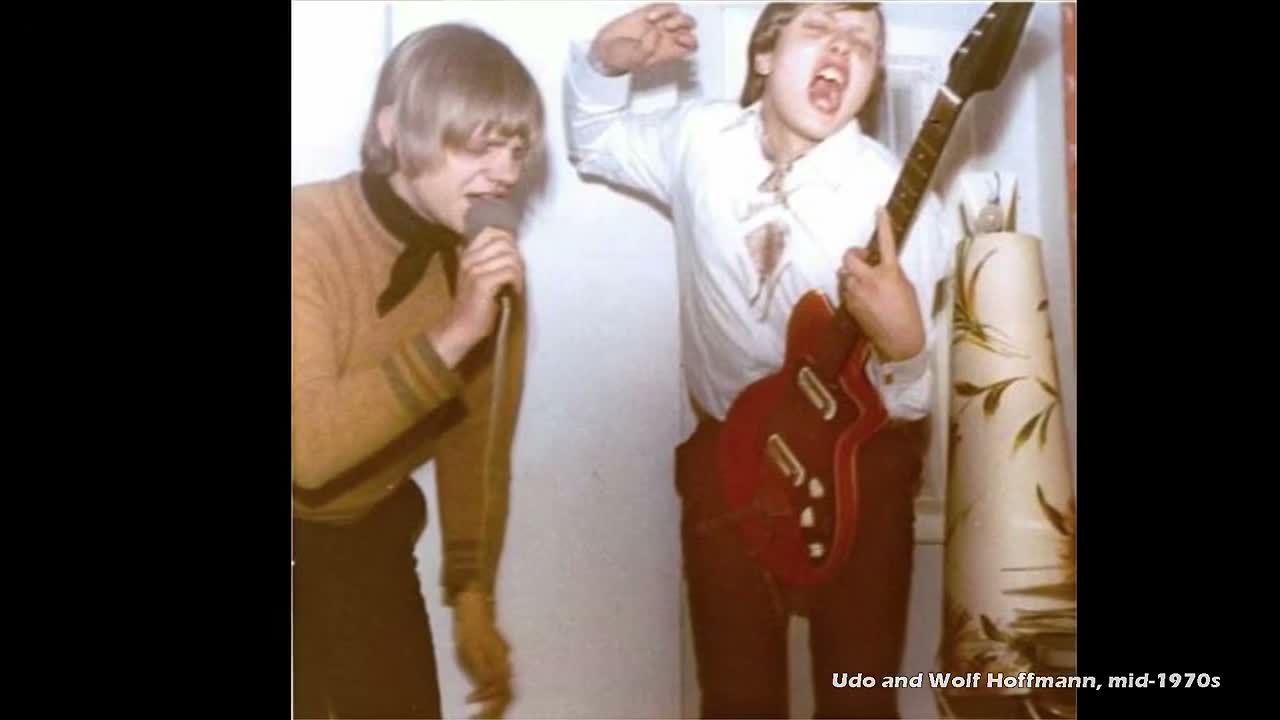
In those years the band had no stable lineup: musicians came and went and the only constant was Udo. That’s why it’s hard to say which was the first proper lineup. The decisive change came in late 1975, when a very young guitarist appeared, Wolf Hoffmann. He was still a teenager, but he quickly developed into the core of the guitar and songwriting: the duo of Udo and Hoffmann became the foundation of their classic sound.
The name and the first contract
In the mid-1970s the band took the name that made them famous. The origin is almost funny: Udo had then bought the Accept album by the British Chicken Shack, a blues and hard rock outfit. But even after the name change it took years to get a contract, so this wasn’t a band that made two demos and signed immediately. An important moment was their appearance at a big festival in 1976, which made them known outside the local clubs, and slowly the German music industry began to take an interest.
Bassist Peter Baltes and guitarist Jürg Fischer were added to the lineup, and in 1978, after almost ten years of playing small venues, they signed with the small German label Brain Records. In September and December they entered the studio and their first work, titled simply Accept, was released on January 16, 1979, with Frank Friedrich on drums. Musically they still moved in the territory of classic European hard rock, with the 70s influences clearly audible, and Udo didn’t yet use everywhere the voice that would become his trademark. The record sold very little, but it opened the door to tours outside Germany, in Belgium, the Netherlands and France.
After the first record Frank Friedrich left and his spot went to Stefan Kaufmann, a change far more important than it seems: he wasn’t just a drummer, he became a key collaborator and later had a substantial role in the production and in shaping the band’s sound.
I am a Rebel: the song that came from AC/DC
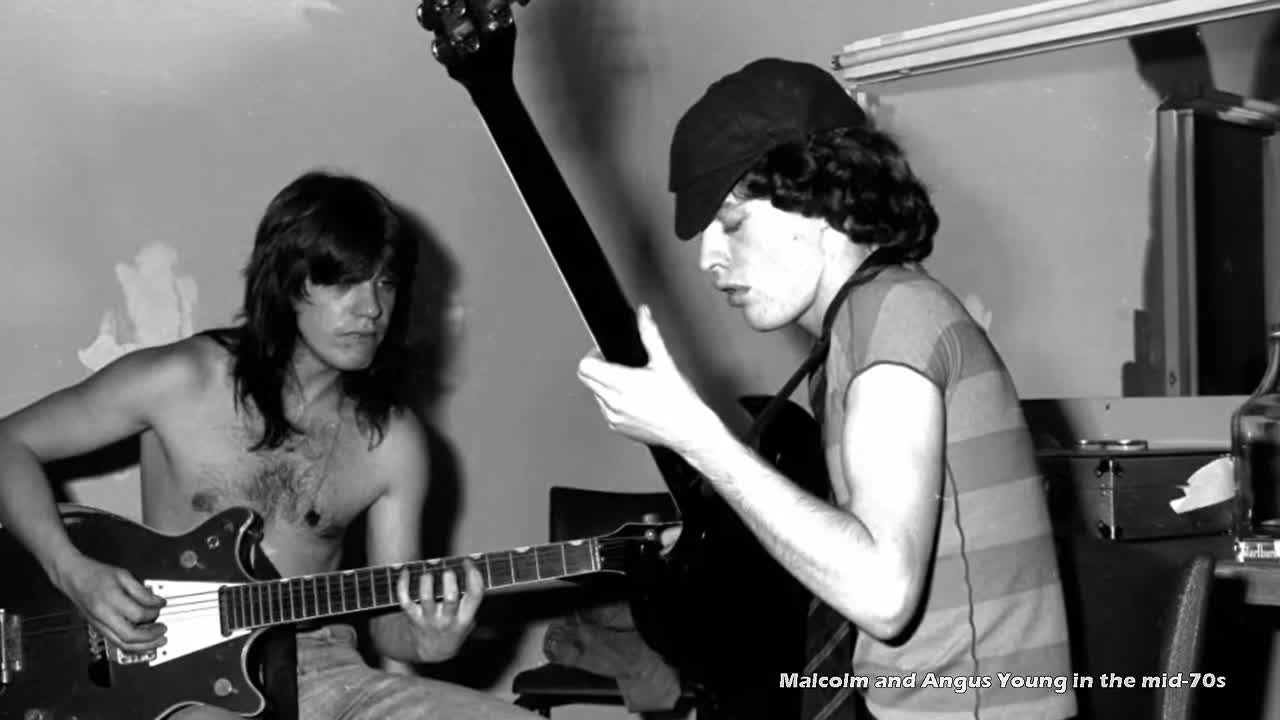
The second record, I am a Rebel, was released on June 2, 1980 and showed a band still searching for direction, trying out a more commercial sound than the debut. On two slower tracks, No Time to Lose and The King, the lead vocals are sung by bassist Peter Baltes. The title track is credited to a George Alexander, which is a pseudonym of Alex Young, older brother of AC/DC’s Angus and Malcolm Young. The Australians had recorded the song in an early form but it had never come out, and Young gave it to the Germans because he considered it a sure radio hit. It also became the basis of the band’s first music video.
The record got international distribution in Britain and the United States. On the foreign editions the cover shows a sword hilt, a far more recognizable heavy metal image than the German original, while the American edition by Passport simply called the record Accept, since the debut had never come out in America.
Breaker: here the band we know is born
After the I am a Rebel tour, in late 1980, the band entered the studio for the next record. Two things changed: the engineer was Michael Wagner, who later became a well-known heavy rock producer, and the band decided not to let any outside factor influence it, that is, to make the record it wanted. Breaker was released on March 16, 1981 and here, essentially, the band we know is born: the production gets heavier, the guitars more aggressive and Udo largely abandons the effort to sound like a conventional hard rock singer, now using his screechy, aggressive voice as a weapon. Tracks like Starlight, Breaker and Burning show a band much closer to the European heavy metal that would dominate in the following years, while Son of a Bitch showed an appetite for provocation.
The next crucial step was the tour as support act for Judas Priest, in November 1981, on the last leg of the Point of Entry tour. It was a huge lesson: Priest were at a far higher professional level and Accept saw every day how a big tour works, how a band is presented on stage, how a set is built, how the lights and production work. They later used what they learned on their own concerts.
Restless and Wild: the sound is found
In early 1982 the band entered the studio with a serious problem: guitarist Jürg Fischer had left and they were looking for a replacement. For a while they tried another guitarist, but the collaboration didn’t go further, and they made the important decision to make the record with Wolf Hoffmann playing all the guitars. They also changed studios: they went to Dieter Dierks Studio, the place where the Scorpions had recorded all their classic albums. Michael Wagner again took on the technical side, doing the engineering and mixing, while at the end Herman Frank was added as second guitarist, his name appearing on some editions without him having played anything on the record. In the same period a figure extremely important to their course appeared, Gaby Hauke, manager and partner, later wife of Hoffmann, who appears in the lyrics under the pseudonym Deaffy.
Restless and Wild was released on October 2, 1982 and opens with one of the strangest intros in metal history: the old German children’s song Ein Heller und ein Batzen, then the sound of the needle scratching and suddenly Stefan Kaufmann throwing an incredibly fast double bass over Fast as a Shark. The shock is enormous. For 1982 the song is really fast and aggressive, and it is one of the most important tracks in the transition toward speed and thrash metal. The record is otherwise very varied: the heavy Restless and Wild, the slow Shake Your Heads, the classic Demon’s Night, the melodic Neon Nights and one of the most important epic songs of their career, Princess of the Dawn, where the band sounds slow, almost hypnotic and Udo sings almost melodically at points. The track ends abruptly, with no resolution at all, an idea that, as Hoffmann later said, didn’t work all that well.
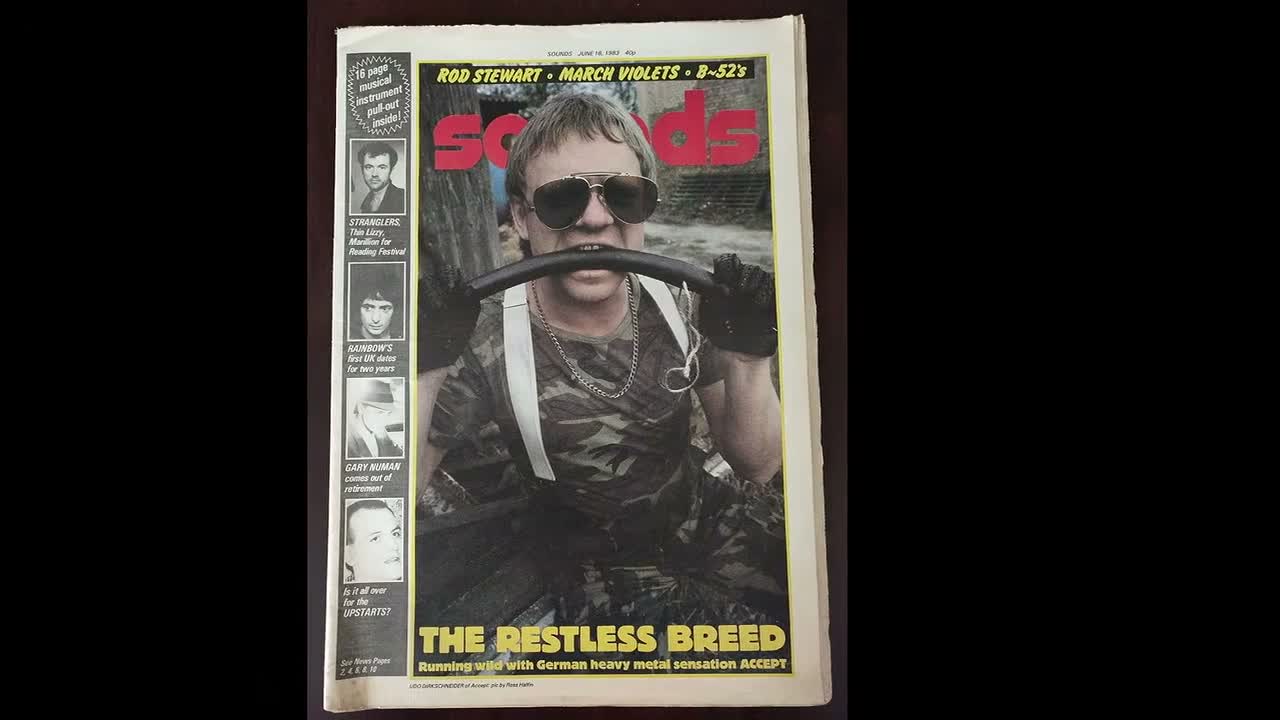
Restless and Wild is the record where the band fully finds its sound: rhythms that hit, heavy guitars, choral choruses, Udo’s distinctive voice and a strict, mechanical, almost military atmosphere. For the first time the name Accept began to be heard so much outside Germany. That year the new wave of British heavy metal exploded, with Iron Maiden, Saxon and Def Leppard becoming known worldwide, and Accept, without being British, were very close in style and benefited from the success. The tour for the record stayed within the home country and continental Europe, with five extra dates in Britain, still no America.
Balls to the Wall: the album that took them everywhere
The band was determined to close the America gap with the next record. It needed a sound that stayed heavy but had bigger hooks, bigger choruses and a more direct production. The recordings were done in July and August 1983, again at Dieter Dierks’ studio, with Michael Wagner on the mix, and the record Balls to the Wall was released in December 1983.
Here Accept achieve exactly what they wanted: a sound that is simpler, bigger, more direct. A prime example is the title track, with its huge riff, the almost military rhythm, Udo’s voice and above all an incredibly catchy chorus with male choral backing. At that time the band covered all sides of the style: London Leather Boys, Love Child, Head Over Heels, Turn Me On.
The record also had a misunderstanding that followed it: the lyrics, all by Gaby Hauke under the pseudonym Deaffy, were read in America as references to sexual identity, while the cover with the bare hip and the leather strap reinforced the impression. Wolf Hoffmann later said the reaction was excessive, while Gaby herself explained it was her own choice: she wanted to write about people on the margins, about social oppression, and the American audience read the songs in a way she hadn’t considered.
1984 was the year of their biggest tour. In February they played in the United States for the first time, as support for Kiss on the Lick It Up tour. In March they played at Radio City Music Hall in New York, while they also did a concert of their own at a Brooklyn club that went down in the venue’s history. Appearances with Blue Öyster Cult, Saxon and Ozzy Osbourne followed until June, and all summer a tour of Europe. The highlight was the Monsters of Rock festival, on August 18, 1984.
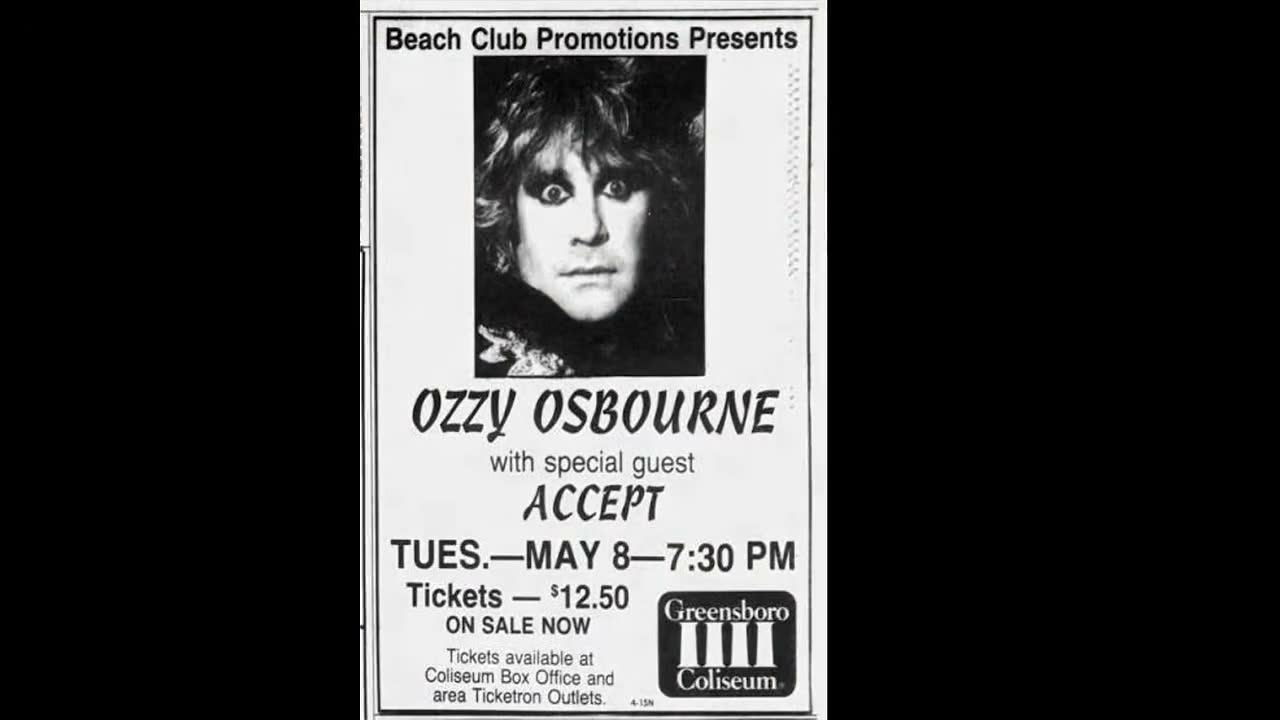
Balls to the Wall is also the only Accept record certified gold in America, while the band became the first German metal group to play in such big stadiums outside Germany.
Metal Heart and Russian Roulette
The next record, Metal Heart, was released on March 4, 1985. For the first time the songs were written in the United States and Herman Frank left so Jürg Fischer could return. The production was taken on by Dieter Dierks, in the first time the band worked with such a large budget: the recordings lasted weeks with constant changes, Udo’s voice sounds more controlled. The title track opens with an excerpt from Tchaikovsky’s Slavic March and the solo has Beethoven’s Für Elise. There is also Screaming for a Love Bite, an attempt toward the more commercial, but also Teach Us to Survive, with jazz influences. The record reached number 94 on the Billboard 200 and 50 in Britain, and the 1985 tour passed through Europe, America and Japan, where the live Kaizoku-Ban was recorded in Osaka, on September 18, 1985.
Russian Roulette came in April 1986, with the band taking on the production itself and returning to a heavier, less polished sound. The lyrics turned to themes of war and propaganda, with tracks like TV War and the title track, but also Monsterman, Aiming High and Heaven Is Hell. The record did well in Europe, but it didn’t bring the breakthrough in America, and along with internal disagreements it marked the end of the golden era.
The split with Udo and Eat the Heat
After Russian Roulette the internal situation was tense. The commercial side saw that glam metal dominated in America and pushed for a singer closer to that style, something that Udo, with his screechy voice and image, could hardly provide. The result was the decision for him to leave the group. He says he was fired, other sources speak of an amicable agreement, while Wolf Hoffmann has said the contracts made a firing complicated and in the end it was a joint decision.
Udo went on with U.D.O. and the album Animal House in November 1987. It is telling that the songs already prepared for Accept’s next record were given to him, which is why Animal House sounds to many like the lost successor to Accept. The new band even toured with Guns N Roses and Lita Ford.
On the other side Accept tried various singers, among them a Briton who didn’t convince, and settled on the American David Reece, with a very different voice, more melodic and American. Jürg Fischer left again, with Hoffmann playing all the guitars once more, while guitarist Jim Stacy was added for the tour. The record Eat the Heat was released on May 11, 1989, with production by Dieter Dierks, mastering by Bob Ludwig and one ballad, Mistreated. It didn’t do well, staying at number 137 in America: the glam market had collapsed, thrash was rising, while the fans didn’t recognize the voice they were hearing.
On the tour things went worse. The appearances with Wasp and Metal Church drew few people, and for a concert in Chicago, where Reece got into a backstage fight with Peter Baltes, all the remaining shows were cancelled. Shortly after, Accept disbanded.
The first comeback
Interest, however, had not died. The live album Staying Alive, released in October 1990 with material from the 1985 Japanese tour, showed there were people asking for the classic lineup. Talks about a reunion began, with Udo setting one condition: to return only if the band made real Accept music again. Stefan Kaufmann and Peter Baltes returned, with Wolf Hoffmann on guitars, and Objection Overruled was recorded in 1992 for release on February 1, 1993.
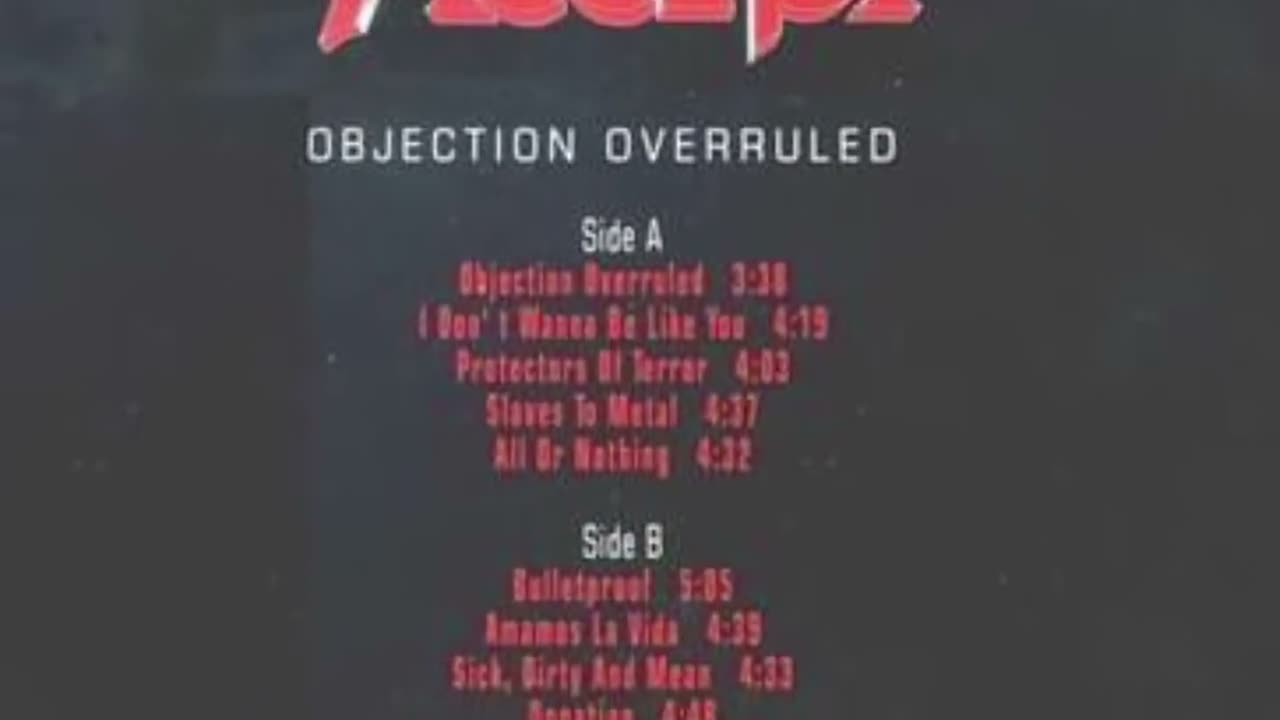
The album was one hundred percent Accept and did well in Europe and Japan. A world tour followed, with their first concerts in countries of the former Eastern Europe but also in Greece, and about thirty appearances in America.
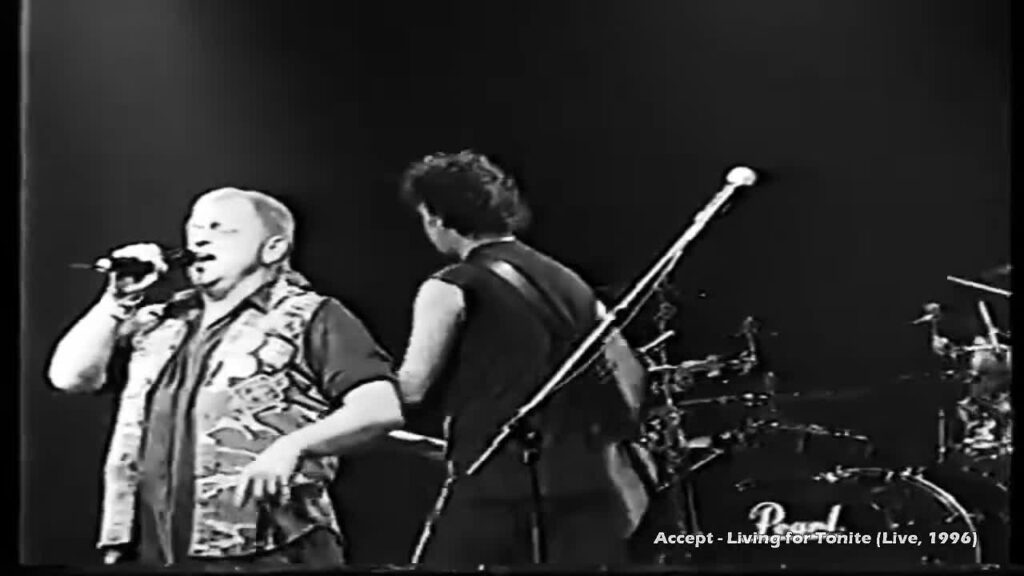
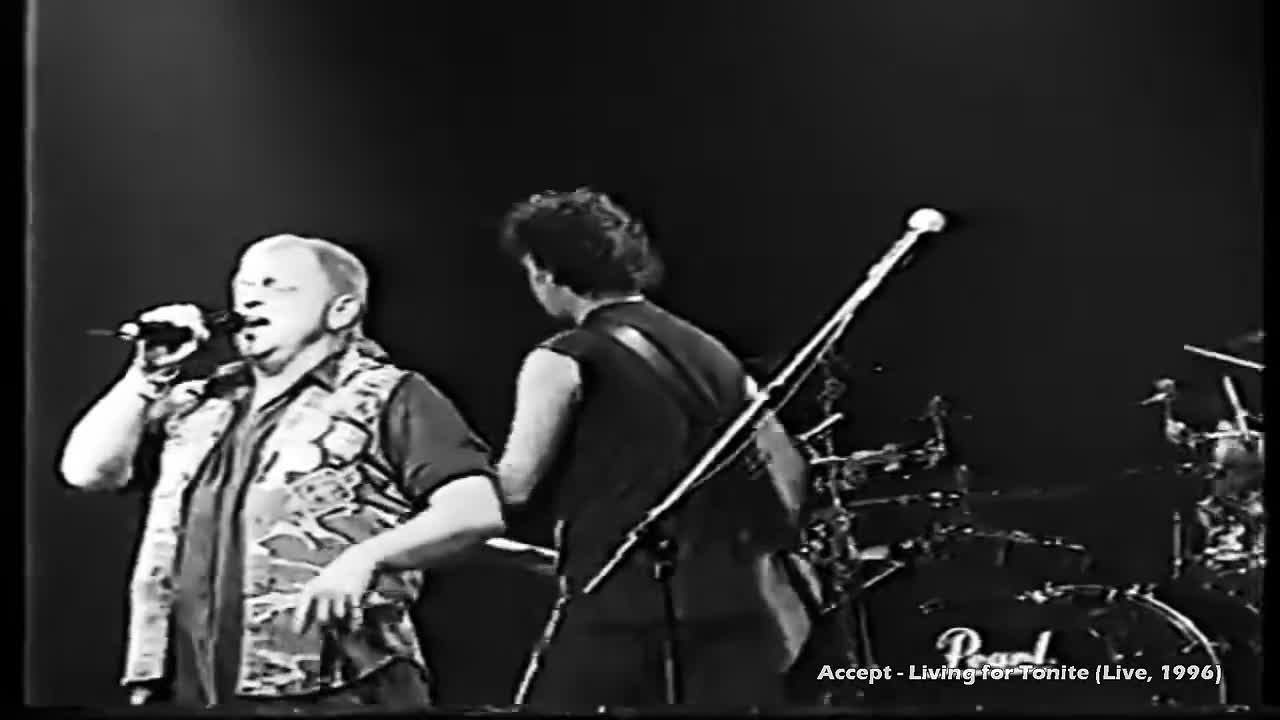
In the second half of the reunion a second guitarist was missing, something Udo had pointed out, saying Accept are a band with two guitars. Death Row was released on October 1, 1994, heavier and darker, with the sound of the 90s. Kaufmann was facing health problems and Stefan Schwarzmann came in his place. Predator was recorded in Nashville, with Michael Wagner again and Michael Cartellone on drums, and was released on January 15, 1996, shortly before the band disbanded for the second time.
The second comeback
Accept stayed silent for more than a decade, until 2009, when their return was announced with a new singer, Mark Tornillo. The sound had to be modern but sound like Accept, and they themselves said characteristically that they had to sound like the Accept of 2010, not like a revival.
Blood of the Nations was released in August 2010 and was the album that changed the band’s modern history: heavy, modern, full of energy and above all full of songs. Tracks like Beat the Bastards, Teutonic Terror, Kill the Pain and the title track are pure Accept anthems, while the excellent The Abyss shows a more epic and dark side, looking straight at corresponding songs from the glorious past. Tornillo doesn’t try to become Udo: his voice has a similar roughness and he can sing the old songs, but it has a different character, with more blues and hard rock background. He has described how demanding it was to learn to sing classic tracks, for example Breaker, without simply imitating his predecessor. The record sold very well, got positive reviews and its tour went excellently, so the reunion became permanent and the band operated as a regular group and not as a nostalgia act.
Two more albums followed with the same logic, Stalingrad in 2012 and Blind Rage in 2014, both produced by Andy Sneap, adding new anthems to the repertoire, such as Stalingrad, Hellfire, Shadow Soldiers, Stampede and Dying Breed. They sold very well and got excellent reviews, continuing the course of the second reunion. Blind Rage even achieved something none of their classic records had: it reached number one on the German charts. After almost forty years of a career around the world, the band was triumphantly recognized in the country it started from.
The story could have stopped there, but after the great success of Blind Rage things began to loosen. After the end of the record’s tours both Frank and Schwarzmann left, while after the next album, The Rise of Chaos in 2017, Baltes also left. The departures didn’t have the drama of the past, though Baltes’ later collaboration with U.D.O. suggests something. The band’s current lineup is practically Hoffmann and Tornillo along with a series of musicians who don’t have the years-long relationship of the previous ones.
With this lineup Accept put out two more albums, Too Mean to Die in 2021 and Humanoid in 2024. The level remains consistently high, with a small caveat of course about how much these records are Accept albums or Hoffmann’s personal works. In 2019 another important chapter closed, when Gaby Hoffmann retired from her position as manager.
To wrap up
There is no doubt that Accept are among the most important and influential bands in the history of heavy metal. They are not a band of one song or one record, as many mistakenly believe. They brought a harshness, an extremity and a Germanness, if one can put it that way, to the most classically British sound of heavy metal. That sound spread to countries and bands and transformed into new genres and structures within the world of heavy rock. They were the continuation of the German scene after the Scorpions and the connecting link between the Hannover band and the power metal scene of Helloween and Blind Guardian. They were innovative, unique, characteristically German and uncompromisingly metal. They were simply essential.
More on the same side of metal: Accept: None of the former members accepted the invitation for the anniversary album «Teutonic Titans 1976-2026».
See also
ACCEPT: 50 years of heavy metal with 50 guests on Teutonic Terror
Wolf Hoffmann: Accept haven’t written a single note of a new record yet
See also: Black Label Society: The live video for «Ozzy’s Song» from its first performance