Style: Folk black metal, post-minimalism (Mixed vocals)
For fans of: Agalloch, Colin Stetson, Panopticon
Country: Brazil
Release date: May 24, 2026

When Phil Tougas released albums with Exxûl and Worm back-to-back earlier this year, I began to wonder how prolific artists with multiple projects keep their bands separate in their minds. How did Phil Tougas know which riffs would be epic doom ( Exxûl ) and which gothic black doom ( Worm )? How does he distinguish which shreddy guitar solos are better suited to Cryptopsy worship ( Serocs ) or power/prog ( Eternity’s End )? This brings me to the Brazilians Kaatayra , the band that announced the existence of Caio Lemos in the mid-2020s. After releasing five albums under the alias, Lemos put Kaatayra on indefinite hiatus . In the meantime, he stayed busy with other projects – I’ve reviewed seven of his albums for the blog since Kaatayra broke up, and those aren’t all he’s released in that span. With so many works to choose from, why did Caminhos de Água lead to the revival of Kaatayra ?
- See this related article too: Review: Ram-Zet – Sapien | Metal Territory
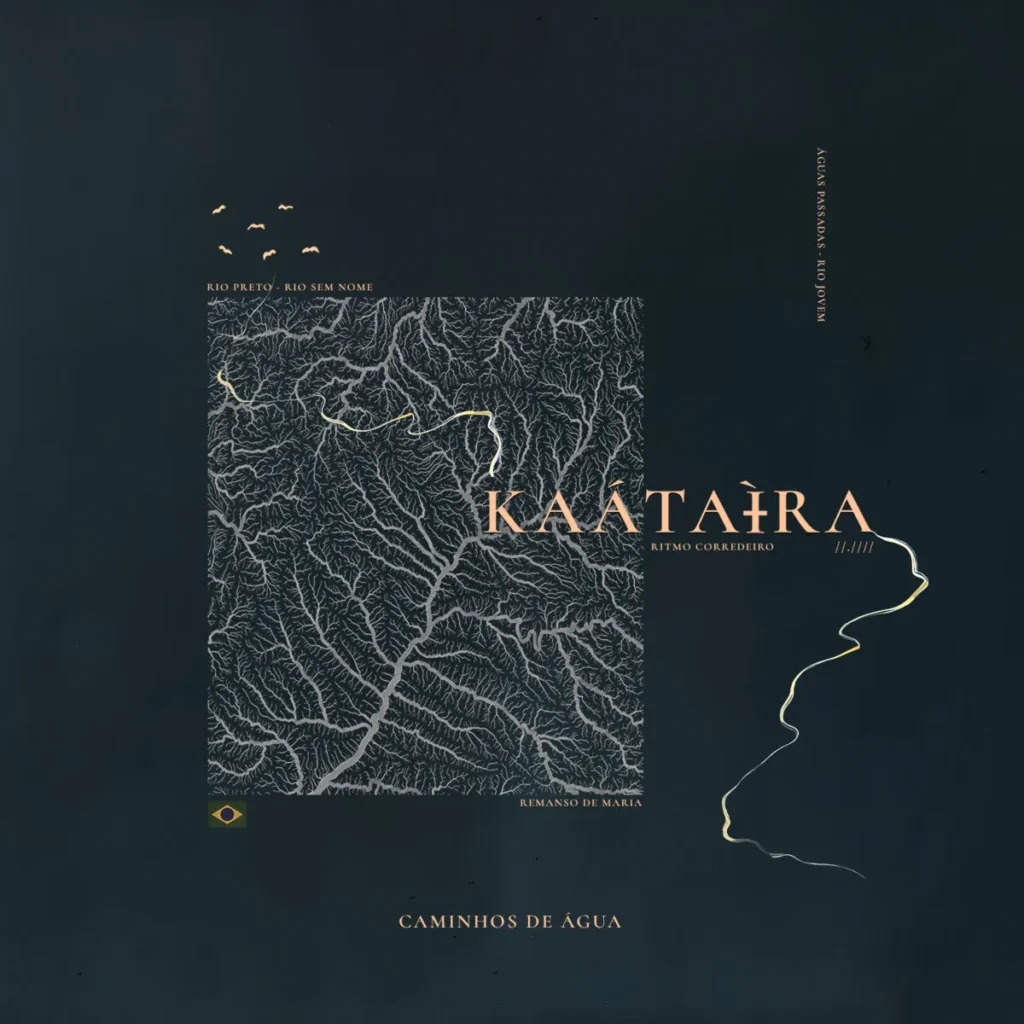
Lemos has released several masterpieces under various names, with as much creativity and effort as Kaatayra , but I think Kaatayra is the most authentic of him, embodying Caio Lemos as a person. Bríi and the others have his signature sound and often touch the magnificent, but you can feel the heart and soul of the man embedded in Só Quem Viu o Relâmpago à Sua Direita Sabe , Inpariquipe and now on Caminhos de Água . As the title suggests, Caminhos de Água is inspired by the idyllic rivers of central Brazil, where Lemos comes from, and uses this naturalistic theme to frame a metaphor for the memory of his grandmother, who passed away during the recording: Given the multifaceted purpose of this newest Caio Lemos album, the necessity of the Kaatayra name is clear. Both the opening “Rio Preto” and the closing “Remanso de Maria” – a quiet minimalist piece dedicated entirely to his grandmother – contain words from her. The latter is an incredibly sweet and slightly humorous exchange between the two, in which Caio teaches her how to recite the short poem he wrote for the intro, providing a touching picture of their relationship. Lemos also sings about how she taught him to love but never how to say goodbye on “Remanso de Maria”. Continuing the record’s strong emphasis on family, Lemos also uses part of the title track to sing an adorable duet with his young niece, whose clear, airy voice blends naturally with his own.
Those familiar with Bríi and Kaatayra won’t be surprised by the sound of Caminhos de Água , as it is yet another album with Lemos’s signature sound. Those unfamiliar will hear something completely original, as Kaatayra once again performs black metal riffs exclusively on acoustic guitar – as well as with a greater emphasis on woodwinds this time – within a sea of polyrhythmic blast beats, bells, whistles and percussion. Many of the myriad rhythmic highlights take place on “Águas Passadas”, such as the drum and synthesizer parts that fade into each other in the early stages of the track – a choir of sung vocals does exactly the same after the midpoint. Following a new, weathered interlude filled with water sounds, flutes and amorphous synthesizers, “Ritmo Corredeiro” raises the intensity with drum-and-bass-inspired percussion that erupts into intricate blast beats at the start of the next song.
- Don’t miss this article: AURORA BOREALIS – Disillusioned by the Illusion (2026) | Review | Metal Territory
Between swells of blackened, blast-beat-laden intensity, Kaatayra builds repeated post-minimalist motifs into grandiose crescendos. Thematically, each track begins and/or ends with field recordings of flowing rivers – as if the album is always at the river – before slowly adding the instruments. Piano, acoustic guitar and various styles of percussion are Lemos’s strong point, especially as one of the most underrated drummers in metal – the entire Kaatayra sound, combining his various influences with black metal, meets on the final third of “Águas Passadas”. Furthermore, Lemos’s clean vocals are at their strongest on Caminhos de Água . The complex mixture of emotions that arose during the recording process for the record surfaces through his voice. As always on a Kaatayra album, the harsh vocals provide a valuable stylistic contrast, but are also the weakest element, rather utilitarian stylistically – the guest vocals of Flávio Dourado, which are a mix of clean/harsh style, on “Águas Passadas” are strong.
The biggest strong point of Caminhos de Água compared to other Kaatayra albums is its production, which allows Lemos to crystallize the emotions into the music, being more vocal than ever. The accumulations and releases are facilitated by the wide dynamics that focus on transparent production rather than absolute sonic control, allowing clarity in both the metal and folk minimalist sections. Lemos manages to maintain the earthy atmosphere of the previous albums while adapting enough to match the calm of a winding river.
Caio Lemos delivers again and again excellent quality, and Caminhos de Água ranks among his best works to date. Caminhos de Água is a purifying album that captures the grandeur of Brazil’s natural beauty, while also serving as a quiet tribute to his grandmother. While Lemos’s music transcends whatever the name of the project is, it is entirely fitting that such a personal album is a return to what started it all, a fitting new chapter for Kaatayra .
Recommended tracks: Rio sem Nome, Águas Passadas, Caminhos de Água
You may also like: Bríi, Vestígio, Salqiu, Vauruvã, Oksät, Antropoceno
Final verdict: 9/10
Related links: Bandcamp | Instagram
Label: independent
Kaatayra is:
– Caio Lemos (everything)
With guests :
– A. Lemos (vocals: track 6)
– Dona Maria (spoken word: tracks 1, 7)
– Flávio Dourado (vocals: track 3)
– Pedrito Hildebrando (vocals: tracks 2, 6)