Quorthon — born Thomas Börje Forsberg — came into the world in Stockholm on 17 February 1966 and died on 3 June 2004, at the age of 38. In the years between those two dates he changed the course of extreme music twice: first with the black metal of Bathory, and then with the epic, Viking sound that he invented almost single-handed.
“`From a garage to the first albums
He formed Bathory in 1983, at first using the alias «Ace», borrowed from Ace Frehley of Kiss. The name of the band came either from Countess Elizabeth Báthory or from Venom’s «Countess Bathory». The first recordings were made with help from his father, Börje Forsberg, who ran the label Tyfon Grammofon, while the drums were played by Jonas Åkerlund — the same man who later directed music videos for Madonna and Roxette.
The sound came out of a garage, «Heavenshore Studio», on a minimal budget and with distorted guitars. «Bathory» in 1984, «The Return» in 1985 and «Under the Sign of the Black Mark» in 1987 laid the foundations for the Norwegian scene that followed — and the third album, with «Enter the Eternal Fire», showed for the first time the epic side that was still to come.
The man who gave birth to viking metal
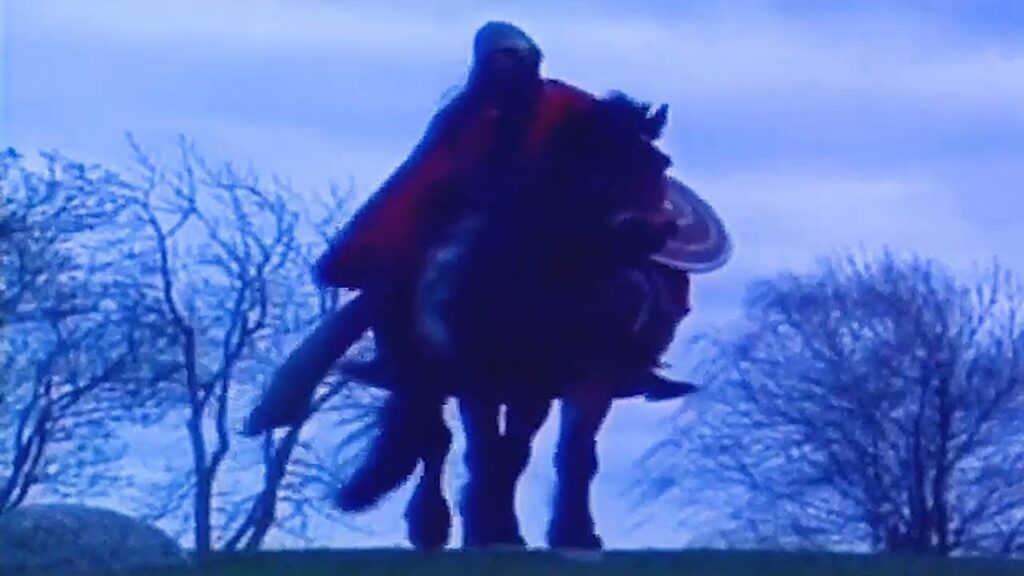
Bathory’s «Blood Fire Death» of 1988 turned the page: the satanic themes gave way to Norse mythology and to the stories of the Vikings. Two years later, «Hammerheart» took the idea all the way — and on that record Quorthon played every instrument himself. 1991 was another turning point: on «Twilight of the Gods» he added acoustic and classical passages and programmed the drum machine on his own.
Others had sung about gods and battles before him; he, however, put that world at the very core of entire albums. Bands such as Unleashed, who covered «Countess Bathory» in Athens, Enslaved, Amon Amarth and Helheim later built on that idea. «Under the Sign of the Black Mark» remains to this day the point where black metal first met the epic.
Thrash, experiments and a return to the North
The 1990s found him trying everything. Under the Bathory name he released «Requiem» and «Octagon», two records turned towards thrash, while at the same time he put out his own material under his own name, with a more rock-oriented sound. In 1996 he came back to the Viking sound with «Blood on Ice», and «Destroyer of Worlds» (2001) and «Nordland I» and «II» (2002, 2003) followed.
A man who did not play by the rules
He had stopped playing live in 1985 — he said concerts took him away from writing. He gave very few interviews, never chased attention and changed his sound whenever he got bored of repeating himself. That silence gave birth to rumours, but also to a legend that lasted for decades.
He died in his sleep of heart failure, the consequence of a congenital condition, and was found in his flat on 7 June 2004. He left behind fourteen albums and one EP recorded over twenty years, and two genres — black metal and Viking metal — that owe him their existence.
Sources: Rockrooster (https://www.rockrooster.gr/quorthon-bathory-afierwma/) · Wikipedia (https://el.wikipedia.org/wiki/Quorthon)