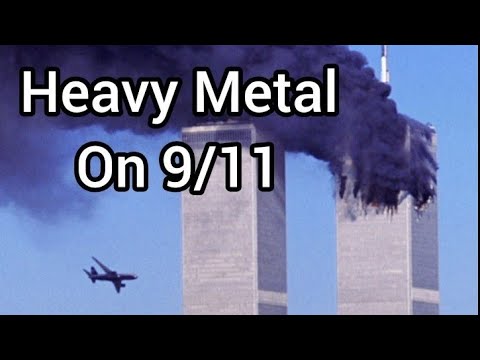
Twenty-five years are completed this year since September 11, 2001, the day the attacks on the Twin Towers in New York changed the world. Beyond the human stories and the grief, that day left its mark on the world of heavy metal too: releases that came out at the wrong moment, tours that were cancelled and bands that found themselves in the middle of the chaos.

The Wyatt’s Metal video gathers the stories of that day from the perspective of metal — from the Slayer album that was released the same day to the personal testimonies of those who were there. Here is what happened.
The albums that were released on the wrong day
September 11, 2001 was a Tuesday, the classic album release day in the music industry. The most characteristic example is Slayer: «God Hates Us All» came out on exactly that day, and its title sounded like a prophecy. The bad publicity, however, was always good marketing for Slayer, and for them there was no fallout at all.
Dream Theater had a completely different story. The same day they released the live album «Live Scenes From New York», with a cover that showed, by bad coincidence, the Twin Towers burning. The album was immediately withdrawn from the shelves and re-released a little later with a different cover.
Machine Head had put out the video for «Crashing Around You» from «Supercharger», with images of tall buildings in flames. The video was pulled from all channels within a few hours. The same day Biohazard also released «Uncivilization», while P.O.D. put out «Satellite» with «Alive» — not as a comment on the events, since it all happened the same day, but the song subsequently became an unofficial anthem of strength for those affected.
Cancellations, stranded bands and the end of Pantera
With all flights in the country suspended, cancellations were inevitable: Aerosmith cancelled a show in Virginia, Anthrax in Nebraska and Godsmack in Maine. Tool were forced to cancel the rest of their tour, Cradle of Filth stopped their American tour halfway and were stuck in the country for a long time, Opeth cancelled their plans to tour the US, Death cut the end of theirs and In Flames postponed a big American headlining tour.
The biggest blow, though, was for Pantera: together with Slayer they were ready for a big European co-headline tour, with Pantera landing in Europe on the morning of September 11. Half of them wanted to go home, the others to carry on. In the end Pantera pulled out, Slayer continued the tour as an act of resistance to terrorism, and a little later Pantera’s original line-up broke up for good — they never played together again.
Metal unites: New York Steel and CBGB’s
The scene reacted in its own way. Eddie Trunk organised New York Steel, a charity concert for the victims, with Overkill, Sebastian Bach, Ace Frehley and Anthrax — who stubbornly refused to change their name, despite the anthrax-letter hysteria, and came on stage in t-shirts that read «we don’t change our name». At the same event Twisted Sister reunited for the first time, raising around $90,000 for the victims’ families.
Even more moving was the story of CBGB’s: the legendary New York venue, when everything was closed, opened its doors on the night of September 11 and stayed open for two months, with bands like Sick of It All, Terror and Madball appearing with no announcement at all, collecting donations and offering shelter to the community. The punk scene also lost one of its own: Johnny Heft, guitarist of The Bullies from Queens, was a New York firefighter and was lost in the attack.
The personal stories
Several names of the field found themselves in the middle of the chaos that day. Bruce Dickinson was in New York and remembers that he understood at once it was not an accident: «Planes don’t accidentally crash into the Twin Towers». Gerard Way of My Chemical Romance saw the towers collapse up close — the trauma of that day pushed him to start the band. The most extreme story is that of Jill Janice of Huntress: at the time she was DJing at Windows on the World, on the 107th floor of the North Tower, every Monday night. The night before the attack she finished her shift and left as usual — less than 12 hours later, the towers no longer existed. As she says herself, months later she found herself in a psychiatric clinic, having lost jobs, money and balance, to rebuild her life from scratch.
The songs born out of that day
In the years that followed, many bands wrote about that day: Dream Theater’s «Sacrificed Sons», Testament’s «The Evil Has Landed», Slayer’s «Jihad», Thrice’s «Broken Lungs», Tesla’s «Heaven’s 9/11», Iced Earth’s «When the Eagles Cry», Ministry’s «Lies Lies Lies», Fear Factory’s «Controlled Demolition», L.A. Guns’ «Okay, Let’s Roll» and Disturbed’s «Prayer». Some as bitter inspiration for the families, some as a comment on the consequences on a global level.
Twenty-five years later, all that remains are the stories of the people who were lost and of the people who stood tall. Metal, as always, found a way to be there: to raise money, to open its doors and to give voice to grief.
See also
If the subject interests you, also see Slayer – Reign In Blood, the story of Twisted Sister with Sebastian Bach on vocals and the complete guide to the sub-genres of Metal.